How to Navigate to Another View in SwiftUI
·1 min read·by dockui
Starting from iOS 16, Apple introduced the new NavigationStack API, which replaces NavigationView and makes navigation more powerful and reliable.
NavigationStack and NavigationLink (iOS 16+
In modern SwiftUI, NavigationStack is the container for managing navigation between views. Inside it, you use NavigationLink to move from one view to another.
Here’s the simplest example 👇
Code Snippet
import SwiftUI

struct ContentView: View {
    var body: some View {
        NavigationStack {
            VStack(spacing: 20) {
                Text("Main View")
                    .font(.title)

                NavigationLink("Go to Detail View") {
                    DetailView()
                }
                .buttonStyle(.borderedProminent)
            }
            .navigationTitle("Home")
        }
    }
}

struct DetailView: View {
    var body: some View {
        VStack(spacing: 20) {
            Text("This is the Detail View")
                .font(.title2)
        }
        .navigationTitle("Detail")
    }
}
When you tap “Go to Detail View”, SwiftUI smoothly navigates to the next screen.
How NavigationLink Works
A NavigationLink automatically pushes the new view onto the navigation stack.
You don’t need to manage transitions manually — SwiftUI handles back navigation, animations, and state.
Passing Data Between Views
You can easily send data to another view using properties or bindings.
Code Snippet
struct UserDetailView: View {
    let username: String

    var body: some View {
        Text("Welcome, \(username)!")
            .font(.title2)
    }
}

struct PassingDataView: View {
    var body: some View {
        NavigationStack {
            NavigationLink("Go to User Detail") {
                UserDetailView(username: "DockUIUser")
            }
            .buttonStyle(.borderedProminent)
            .navigationTitle("Users")
        }
    }
}
Navigation in iOS 17 and Later
In iOS 17, Apple further refined NavigationStack and introduced navigation destinations with typed data:
Code Snippet
NavigationStack {
    List(users) { user in
        NavigationLink(value: user) {
            Text(user.name)
        }
    }
    .navigationDestination(for: User.self) { user in
        UserDetailView(username: user.name)
    }
}
This lets you build complex navigation flows with type-safe data-driven navigation — perfect for large apps.
Similar Blogs
View All Articles
How to use @AppStorage in SwiftUI
Learn how to use @AppStorage in SwiftUI to save user settings and preferences easily with UserDefaults
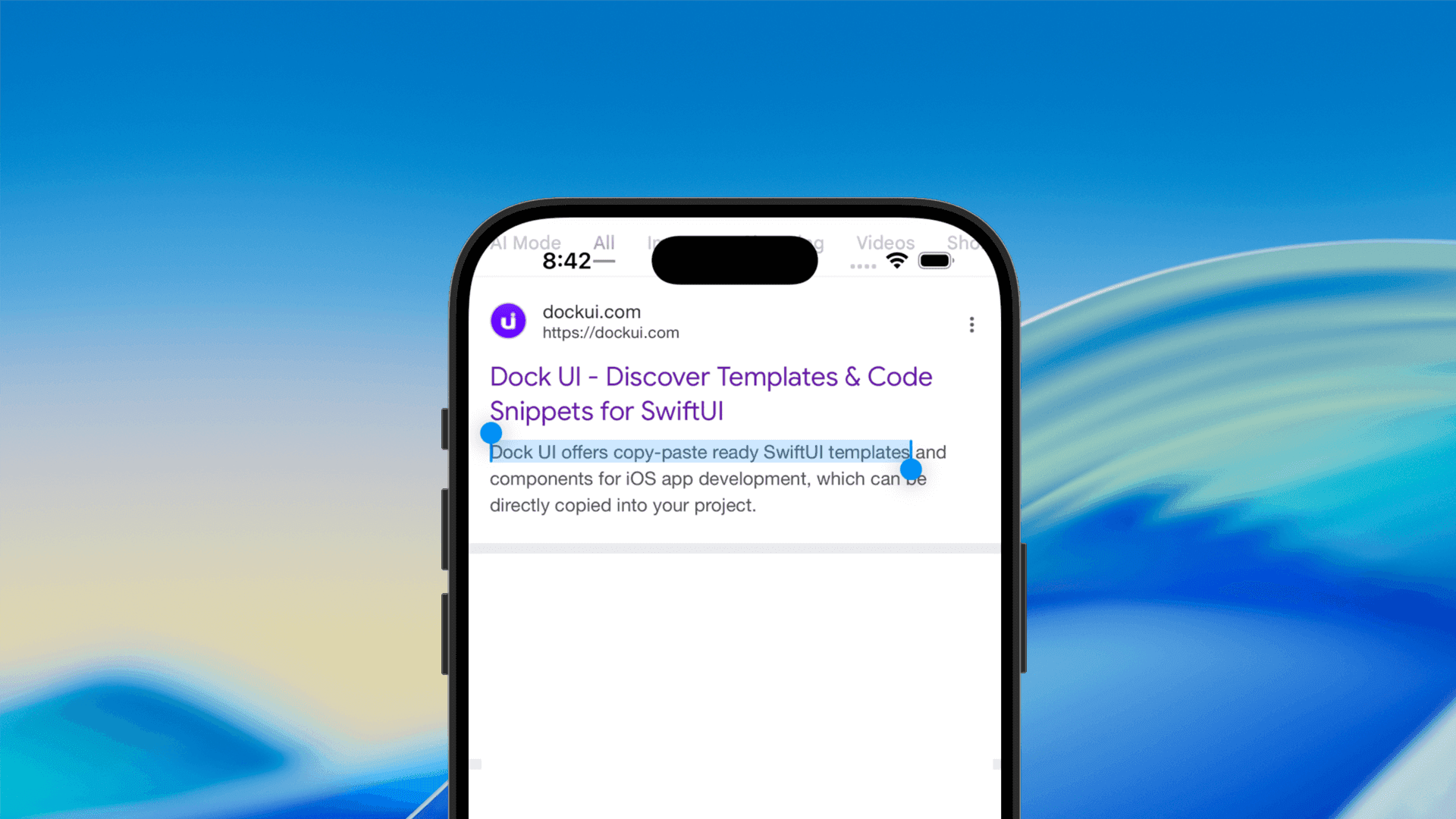
How to Make Text Selectable in SwiftUI
Learn how to make text selectable in SwiftUI using the .textSelection(.enabled) modifier. Enable text copying and selection easily in iOS 15 and later with
How to Dismiss a Sheet in SwiftUI
In this guide, you’ll learn the modern way to dismiss a sheet in SwiftUI, how it works, and how to make it fully compatible with your existing code.
How to Add Bar Items to a Navigation View in SwiftUI
Add bar items to your SwiftUI NavigationView using .toolbar() and ToolbarItem. Customize buttons and placement easily.
Code copied to clipboard!